Digital media has shaped the way we access information. It offers clear structures, clear messages, and a clear impact on its audience. While this is helpful for the producers of these digital medias and general population, digital media can also result in polarization and overall impairment of literacy. Through my experiences in navigating digital media, I argue that while digital media are highly effective for navigating information, and should still be used, its impacts backfire if consumers do not practice other forms of literacy consistently.
Originally, I developed a positive view of digital media. The first experiences I had with digital media centers on my childhood watching cartoons. I would spend my mornings at my grandmother’s house watching “Curious George” before school. “Dora the Explorer”, “Caillou”, “Arther”, and the “Bartenstein Bears” also became significant cartoons in my digital media journey.

These animated shows had a forward path, telling a story from the beginning to the end. These cartoons also portrayed the conflicts of these stories in a clear way, allowing me to fully understand the issue of the story, while also portraying the key themes in a clear way. Through the media’s animation of talking animals, my engagement not only remain steady throughout the whole show, but it also built my imagination and empathy. These cartoons combined multimodal texts, combining linguistic, visual, gestural, spatial and aural to tell compelling, clear stories (Jones and Hafner, 65).
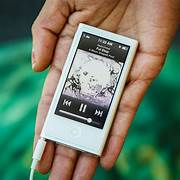
My experience using an iPod during my early years gave me a sense of agency; in doing my positive of digital media only grew. Unlike watching cartoons, where I did not have much control over when the cartoons were playing, I had ample agency in downloading my preferred music (Soliday 512). I was able to control what song was playing at a given time by shuffling or skipping a song. Additionally, I also had agency in how the iPod was actually being use. Sometimes, I would connect the iPod to the speakers, while other times I would play the music through earbuds. These experiences show the affordances – the possibilities of the media’s use, of the iPod (Purdy, slide 3). The fact that one has agency to control songs played as well as use the iPod depending upon the audience. Additionally, given that the iPod is small, I was able to bring it with me everywhere. However, there were also many constraints, or limitations, of this device (Purdy, slide 3). The songs were downloaded on to the iPod, so I was only limited listening to those songs. I also had limited storage space, and given the size of the iPod, little information could be displayed. Ultimately, these experiences helped me understand that my sense of freedom came from the device’s affordances and constraints.
When I got an iPhone, my perspective of digital media ultimately changed; while I enjoyed the convenience of being able to communicate with people on multiple expansive platforms, it also caused a sense of becoming isolated. One event that shifted this perspective was the public’s reaction to the 2020 death of George Floyd. Political discourse heightened on social media, and while I was always mindful of my own invisible audiences, I learned what it to become one. As boyd points out, in face-to-face conversations, we can see who is listening, and tailor our communication to that listener (boyd). However, given that people communicate on social media, we do not actually know who is viewing the content, when people view it, or how they interpret. My homepage of Instagram became filled with emotionally charged content of Floyd’s death, hatred towards law enforcement, and even denial of the officer’s wrongful handling of the case. Given, as boyd points out, that social media collapses contexts, I became this invisible audience – present but unacknowledged. While I did not comment my own disagreements at the time, I learned how political polarization can create feelings of isolation within digital media.
On the other hand, however, digital media has challenged my individual reading ability; this furthered a more techo-dystopian perspective of digital media (Jones and Hafner, 136-137). Digital messages are designed to share a clear message. Part of being an English and History major is absorbing a significant amount of text and being able to analyze it. Yet imagine yourself sitting at your dining room table at 7pm. The only thing that stops you from reading is the iPhone that sits right next to you, playing the next Instagram reel. By 11 pm, you have only finished ½ of the reading. This has been my experience for quite some time.
Nicholas Carr argues that the emergence of modern technology is making people, well, stupid. This is not an absurd phenomenon, however. He references multiple anecdotes in explaining that while reading long articles may have been easier in the past, absorbing these pieces is simply much harder now (Carr). Today’s usage of digital media is causing us to skim what we read, rather then deep read. Carr references Wolf in explaining that our focus on “efficiency” and “immediacy” promotes skimming, which “may be weakening our capacity for the kind of deep reading that emerged when an earlier technology, the printing press, made long and complex works of prose commonplace” ( Carr). Online reading, Wolf suggests, causes us to take in information without synthesis or reflection. Carr further argues that distraction is not just a natural consequence of digital media but instead an intended result. He explains,
Most of the proprietors of the commercial Internet have a financial stake in collecting the crumbs of data we leave behind as we flit from link to link – the more crumbs, the better. The last thing these companies want is to encourage leisurely reading or slow, concentrated thought. It’s in their economic interest to drive is to distract (Carr).

On the other hand, Carr emphasizes the neurological changes the brain makes when we use digital media. In referencing James Olds, a professor of neuroscience at George Mason University, he explains that through neuroplasticity, “nerve cells routinely break old connections and form new ones” (Carr). Thus, the brain reprograms itself, adapting to repeated habits and stimuli. In my case constant engagement with digital media has trained me to skim, making uninterrupted reading become hard. This has shaped my view of digital media negatively, as it has made the simplest tasks require more effort than it once did.
Although these experiences have formed a negative view of digital media, I have been able to use digital media to create my professional image. During my junior year of college, I created a LinkedIn account. In navigating this professional community, I have come across that the website has a professional and marketable ideology, where networking becomes its primary value(Jones and Hafer, 173-174). Given these values, I have found that people interact with restraint and professionalism; job titles and seniority matter in granting credibility. Yet, in connecting with others, people share agreement and encouragement in greater hopes of reaching a goal. This reflects the website’s face systems, or the ways in which people communicate and address each other (Jones and Hafner, 174). LinkedIn has many forms of discourse – the ways in which people communicate and languages, media, and texts that they use (Jones and Hafner, 174-176). In completing an internship last spring, I was able to describe this experience in the “experience” section of my profile, while also making a post that I was starting an internship with Refuge for Women. Allowing me to see what others posted also reflected the socialization – the ways in which people learn to participate, on the platform (Jones and Hafner, 174-176). In the beginning of my journey, I was not aware of the expectations – of the content that should be shared, how to present a professional identity, how to network effectively. Yet, in viewing many different profiles – for me, attorneys and a law students in the area, I was able to understand how people typically use the app and how they engage with others. This experience taught me that while I do not love digital media, it is a valuable tool to develop and share my professional skills, expertise, and experiences.
In conclusion, throughout my vast experiences in using digital media, I have come to the terms with the fact that while I appreciate digital media for its opportunities to connect with others on both a personal and professional basis, digital media itself is very distracting, which has hindered my overall concentration. Additionally, digital media can be very polarizing, making civil discourage much less approachable online. Ultimately, these experiences have shown me that while digital media has great benefits, it also results in great challenges. Moving forward, I am trying to balance my approach of using digital media – using its strengths while also using different media for reading, communicating, and ongoing learning.
Works Cited
boyd, danah. 2009. “Social Media is Here to Stay… Now What?” Microsoft Research Tech Fest, Redmond, Washington, February 26.
Carr, Nicholas. “Is Google Making Us Stupid?” The Atlantic, July 2008, www.theatlantic.com/magazine/archive/2008/07/is-google-making-us-stupid/306868/.
Jones, Rodney H., and Christoph A. Hafner. Understanding Digital Literacies : A Practical Introduction / Rodney H. Jones and Christoph A. Hafner. Second edition., Routledge, 2021. EBSCOhost, research.ebsco.com/linkprocessor/plink?id=5635bbad-72a2-3d00-b05c-abc3064b7284.
Purdy, James. “Affordances and Constraints.” Writing in Digital Media. 27 January 2026. Duquesne University, PowerPoint presentation. Canvas.
Soliday, Mary. “Translating Self and Difference through Literacy Narratives.” College English, vol. 56, no. 5, 1994, pp. 511–26. JSTOR, https://doi.org/10.2307/378604. Accessed 11 Feb. 2026.
 Site Title
Leave a comment